- About PHAP
- Learning Pathways
- Practitioner Perspectives
- Professional Support
- Member Directory
- Basic Search
- Advanced Search
- Member Discounts: Humanitarian training
- Member Discounts: Professional Support Services
- Job listing
- Member Directory
- Calendar
- Membership



PHAP Online Learning Series on Humanitarian Law and Policy – International criminal law and its role in addressing violations of IHL
How can international humanitarian law (IHL) be implemented and enforced? International criminal law (ICL) plays an important role in this respect, placing responsibility on individual persons for serious atrocities including genocide, war crimes, crimes against humanity, and the crime of aggression.
On 29 September, PHAP members and guests had the opportunity to delve into this topic with Chris Jenks, a law professor with previous experience in the U.S. Army and the co-editor of a forthcoming war crimes casebook. The session will begin with a briefing on ICL and its relevance to humanitarian actors, focusing on its core principles, main instruments, scope of application, and relationship with IHL. This was followed by an opportunity for Q&A and discussion.
Session recording (Adobe Connect - higher quality)
Session recording (YouTube - faster loading time)
Learning objectives
- Appreciation of the relationship between international criminal law and humanitarian law, and the role of the former in supporting the enforcement of the latter.
- Familiarity with the main legal instruments (e.g., treaties) and mechanisms (e.g., courts and tribunals) of the international criminal law framework.
- Knowledge of the main elements of war crimes, genocide, crimes against humanity and the crime of aggression.
- Understanding of the jurisdictional scope as well as general legal principles of the international criminal law framework.
- Appreciation of the challenges to the application of international criminal law in contemporary contexts.
Recommended reading
- Geneva Academy of International Humanitarian Law and Human Rights, Rule of Law in Armed Conflict Project (RULAC), International Criminal Law
- Hortensia D. T. Gutierrez Posse, International Review of the Red Cross, The Relationship between international humanitarian law and the international criminal tribunals
- John Cerone, Susana SáCouto (eds.), War Crimes Research Office at American University’s Washington College of Law, International Criminal Law: a Discussion Guide
Prerequisite knowledge
Recommended sessions:
1. Introduction to IHL and its relevance for humanitarian actors
4. Qualification of Armed Conflict and Determining the Applicable Law
8. International humanitarian law and human rights law in armed conflict
Assessment
PHAP members will have the possibility to undergo a two-part assessment after the session as part of the PHAP Continuous Learning Credits framework.
To encourage peer learning among members, selected essay responses will also be published on the website, if approved by the writer. As a member, you can comment on the responses and read other members' comments.
Read the written reflections
Guest expert
|
|
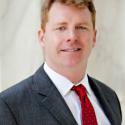 Chris Jenks is an assistant professor of law and directs the criminal justice clinic at the SMU Dedman School of Law in Dallas, Texas. He teaches and writes on the law of armed conflict (LOAC) / international humanitarian law and criminal law. Professor Jenks is the co-author of a LOAC textbook and co-editor of a forthcoming war crimes casebook. He has published articles and book chapters on drones, autonomous weapons, child soldiers, extraordinary rendition, law of war based detention, targeting and government contractors. Prior to joining the SMU faculty, Professor Jenks served for over 20 years in the U.S. Army, serving as as infantry office in Germany, Kuwait and Bosnia and later as a U.S. military lawyer in Korea and Iraq. In his last military assignment, he served as the chief of the US Army's international law branch in the Pentagon where he oversaw the foreign exercise of criminal jurisdiction over US service members around the world.He holds degrees from the United States Military Academy at West Point, NY (B.S.) ; the University of Arizona College of Law (J.D.); the U.S. Army Judge Advocate General's School (LLM) and Georgetown Law School (LLM, double honors)
Event host
 Elizabeth Holland
Consulting Expert on International Humanitarian Law, International Association of Professionals in Humanitarian Assistance and Protection (PHAP)
September 29th, 2015 3:00 PM
through
4:00 PM

