- About PHAP
- Learning Pathways
- Practitioner Perspectives
- Professional Support
- Member Directory
- Basic Search
- Advanced Search
- Member Discounts: Humanitarian training
- Member Discounts: Professional Support Services
- Job listing
- Member Directory
- Calendar
- Membership



Featured Member: Victor Buhendwa Mirindi
Victor Buhendwa Mirindi
Delegate
Primarily based in:
Canada
Interview conducted on:
4 February 2014 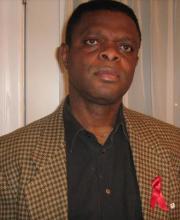
“International agencies struggle to measure the real impact of their humanitarian interventions – if we are honest with ourselves and the world, then we should admit that the nature of humanitarian work means that it is not always possible to know the exact impact of our actions,” says Victor Buhendwa Mirindi, a Delegate with the International Committee of the Red Cross (ICRC)*.
Starting off as a biology teacher in his original home country, the Democratic Republic of the Congo, Victor later switched to the area of nutrition and public health, working for international non-governmental organizations. However, it was the devastating impact of the Second Congo War that brought him to focus on the international humanitarian field. He explains, “Coming from a country like the DRC, in particular from its eastern part, where conflict and humanitarian issues play such a big role, and on top of that having been an IDP [internally displaced person] myself, I could really understand and empathize with the suffering of the people affected by conflict.”
Since joining the ICRC, Victor has completed assignments in several conflict-affected regions, including in the Middle East, Sub-Saharan Africa, the Caucasus, and South and Southeast Asia. “What is always new is the context, and even within a single country there can be substantial differences.” However, this does not mean that humanitarian actors cannot draw lessons from other crises. He adds, “Once we manage to successfully identify and understand the specific context of the area, we can adapt and apply one of our tested intervention strategies relevant for that particular setting.” Victor also finds it important for individual humanitarian practitioners to learn from each other, something he sees membership in PHAP as an excellent platform for: “PHAP is an excellent place for sharing experiences, which can assist individual workers to increase their impact in the field.”
Reflecting on the challenges of the job, Victor first of all underlines the security situation as being the main concern. And, understandably, he underlines how economic resources, or rather the lack of them, is a constant challenge when surrounded by so much suffering in crisis-affected countries: “Due to financial issues, we cannot help a lot of people in need and only assist the most vulnerable ones.”
“What is always new is the context, and even within a single country there can be substantial differences.
”
Victor also draws attention toward a challenge shared by humanitarian workers everywhere. “As the ICRC, we subscribe to the principle of neutrality, but when observing so much suffering around you, there is a permanent risk that you might pick a side and condemn the perpetrator. You need to be aware of this and remain vigilant that your personal opinions don’t affect how you carry out your professional role.”
When talking about his various experiences working in different countries, Victor mentions in passing that his ethnic origin and the color of his skin has been seen by others, depending on the situation, as both an asset and hindrance. “Working in one West African country, I noticed that I was easily accepted by the local population, which was not true for my white European colleagues.”
On another mission in the Middle East, when trying to enter a military occupied zone, the soldier at the checkpoint asked which country he originated from, and hearing the answer, asked what they could possibly learn from a Congolese, given all of the ongoing problems in his country of origin. After answering that he was first of all a citizen of the world, Victor was eventually let through. “The conversation must have made an impression on [the soldier],” Victor recalls. “Whenever my car showed up at the checkpoint, he would always let me go without the control.” And he adds with a laugh, “My colleagues were always checked.”
* Victor Buhendwa Mirindi participated in the interview in his personal capacity and the views expressed do not necessarily reflect those of the International Committee of the Red Cross (ICRC).
--
Interview by Azim Ostowar
Member Login
Featured Members
Featured Member Profile

International Committee of the Red Cross (ICRC)