- About PHAP
- Learning Pathways
- Practitioner Perspectives
- Professional Support
- Member Directory
- Basic Search
- Advanced Search
- Member Discounts: Humanitarian training
- Member Discounts: Professional Support Services
- Job listing
- Member Directory
- Calendar
- Membership



Featured Member: Mario Stephan
Mario Stephan
Coordinator of Operations, MENA Region
Primarily based in:
Dubai
Member since:
July 2011
Interview conducted on:
29 May 2013 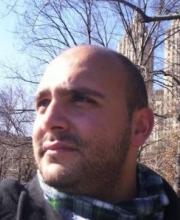
“We strive to be as international as possible, but working in the Middle East and North Africa [MENA] can be very challenging when active in a sector that has been criticized for its westernized approach.” As a Coordinator of Operations for Médecins Sans Frontières (MSF) for the MENA region and Somalia/Somaliland, Mario Stephan explains how building trust with all stakeholders remains a key focus for the often ‘Europe-centric’ humanitarian sector when developing activities in this region. “There is still a lot to do in that sense, so that remains a big challenge,” he says.
 “We strive to be as international as possible, but working in the Middle East and North Africa [MENA] can be very challenging when active in a sector that has been criticized for its westernized approach.” As a Coordinator of Operations for Médecins Sans Frontières (MSF) for the MENA region and Somalia/Somaliland, Mario Stephan explains how building trust with all stakeholders remains a key focus for the often ‘Europe-centric’ humanitarian sector when developing activities in this region. “There is still a lot to do in that sense, so that remains a big challenge,” he says.
Mario’s first involvement in the world of humanitarian action came in 2004 when he began work as a volunteer for Action Against Hunger in London. Since then, Mario’s work as a humanitarian professional has evolved from logistics and security management in locations such as the DRC, Kenya, Afghanistan, and Somalia/Somaliland to coordination responsibilities firstly in Egypt and now for a larger region. Nevertheless, it is still by seeing the difference he is able to make on the ground that he remains motivated in his work: “It is not easy to run these operations, but once you get them going, you get to actually witness the results, which definitely keeps me inspired in my work.”
“The diversity of the network that PHAP has developed – the diversity of the members who all gravitate towards the same idea – is something quite unique.
”
Based primarily in the geographic hub of Dubai, Mario’s location allows him a unique overview of the region he manages. While overseeing the operation of programs in countries such as Egypt, Libya and Somalia among others, he monitors developments in the region that would prompt MSF to engage in new activities. Given the spread of countries and variety of situations in which his programs operate, Mario and his team must focus on a wide range of issues: “What is quite interesting is the diversity of the portfolio that I manage – the specific needs in each location call for very different activities from one country to another.” Mario notes how no one day looks like another, describing how he is “in one place dealing with migrants lacking healthcare, in another with people denied access to healthcare, and in another people without access to healthcare because it is non-existent.”
Apart from gaining the trust of stakeholders, Mario encounters challenges in developing activities within countries that are not traditional recipients of humanitarian intervention. “We often work in middle income countries where the volume of your operations is not a concern,” he says. “Instead, it is really about intervening in specific areas and niches where you will make the biggest difference.” Designing operations to meet these particular challenges requires new thinking: “It is a very different approach to our traditional way of doing things, and an interesting one at that, because of the big change management component that is needed, internally but also with the authorities and communities we work with.”
For Mario, being a PHAP member gives him the opportunity to reach out to people and access knowledge that he would not ordinarily be exposed to. “The diversity of the network that PHAP has developed – the diversity of the members who all gravitate towards the same idea – is something quite unique,“ he says. Interacting and networking with other humanitarian professionals who are engaged in work across a variety of different fields is an important priority for Mario: “With members from the sector as a whole, we have a great opportunity – in terms of understanding other peoples operations and in terms of becoming better in our own operations.”
--
Interview by Róisín O'Grady
Member Login
Featured Members
Featured Member Profile

International Committee of the Red Cross (ICRC)