- About PHAP
- Learning Pathways
- Practitioner Perspectives
- Professional Support
- Member Directory
- Basic Search
- Advanced Search
- Member Discounts: Humanitarian training
- Member Discounts: Professional Support Services
- Job listing
- Member Directory
- Calendar
- Membership



Featured Member: Natascha Hryckow
Natascha Hryckow
Independent Advisor specializing in multilateral interventions
Primarily based in:
Geneva
Member since:
December 2010
Interview conducted on:
8 January 2014 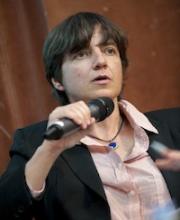
“At the policy level, we need to have a little more confidence that we can be honest with our constituencies about the time and investments required for interventions,” says Natascha Hryckow, an experienced manager of international humanitarian responses, on the phone from her current home city Geneva. “With more realistic time frames, we would be able to spend the same amount of money in a much more sustainable way, and we need to be smart about finding ways to reach that goal – it’s not likely that we are able to change the presidential term in the US.”
Seemingly far from the humanitarian sector, Natascha’s professional career began with being in charge of her family’s large farming business in Victoria, Australia, with 10 000 sheep and 2000 head of cattle, which also led to her trying her hand at lobbying and conducting international trade. “Actually, I think modern farming is a pretty good apprenticeship for the international world,” she says, explaining that “you are operating in an environment where you are certainly not in control, having to keep your focus as there are a million factors that can influence things one way or another.” With a laugh, she adds, “But I don’t think I’ll be able to sell this idea to many graduate students interested in international work.”
Importantly for her ensuing career, it also exposed her to having to deal with natural disasters as part of her work. With Australia’s continuous battles against highly menacing bushfires and floods, Natascha started advising and coordinating the national disaster response teams. “When combining the skills I acquired in disaster response with business management, international trade, and consulting, it became a natural springboard into the humanitarian world, a transition I had long had in the back of my mind,” she explains.
“Whatever happens in Afghanistan in the coming years, the West won’t be comfortable with a lot of it – we struggle to let go of control, to allow people to make mistakes and find their own models.
”
Natascha’s first international humanitarian deployment was as part of the OCHA team in Pakistan after the 2005 Kashmir earthquake which, according to some estimates, took the lives of over 100 000 people. “I was in Muzaffarabad, the epicenter of the earthquake, 76 hours after it struck.” Despite the massive amount of destruction in the country, the resilience and determination shown by the people around her left a lasting impression on her. “Just as in every mountain community I know, whether it is in the Eastern Highlands in Australia, the Hindu Kush in Afghanistan, or here in the Alps, the people are strong and determined, and they know how to get things done,” she says. “Impressive as it is to see them standing up in the midst of all of what they had to deal with, the pain that goes along with it still shows clearly.”
Having been part of several international interventions, she sees as one of the greatest drawbacks that the international community often does not know when to “let go.” She brings up the example of Afghanistan, where Natascha spent a good part of her international career, including as Senior Political Adviser for NATO, and from where international troops are set to withdraw later this year. “The international community’s priority should not be about defeating the Taliban, just because the Taliban encompasses such a broad range of thoughts, such a broad range of aspirations – they will not disappear whatever the outcome for Afghanistan is,” she points out. She adds, “Whatever happens in Afghanistan in the coming years, the West won’t be comfortable with a lot of it – we struggle to let go of control, to allow people to make mistakes and find their own models.” She reminds us that even the more stable parts of the world today have made serious mistakes of their own in their pasts, but from which they have been able to learn. However, this is a dilemma without an easy answer: “How do you allow enough of that learning and development process to take place naturally in a country without it destroying lives, families, and communities?”
From Afghanistan and other places she has worked, she knows the paramount importance of understanding the local political and social context, as well as the history that has shaped it. And you have to understand the people and how they interact with each other. In East Timor, in “a parallel to many other conflicts,” the elites all knew each other from the struggle for liberation. “On the one hand you have the clan history, political history, and financial interests, but on the other hand, a lot of the decisions are very personal, with personal histories running deep,” she explains.
On a related note, Natascha has learnt that you can never that issues and attitudes are the same from one context to another, even when dealing with military and political elites with exposure to the international community. “You need to spend some time to understand the context and relationships – but this is something we are in general very poor at in international interventions,” she admits. For example, working in improving maritime security around the Horn of Africa with EUCAP Nestor, she saw how international interlocutors struggled with understanding informal hierarchies within the militaries in the region, as it was not immediately obvious who was in fact in charge.
Over the last decades, both the diplomatic and humanitarian communities have ended up being posted much closer to active conflicts. “It used to be a military job and the rest of us would stand back, but now there is an expectation that humanitarians should be directly on the frontline as well,” she says. This puts very different demands on the civilian actors from before, which requires adapted training. As far as PHAP is concerned, Natascha sees the association’s professional development program as one way to improve the situation, enabling people to broaden their skill sets and perspectives.
She also sees the professional association as helping to overcome the divide between civilian and military actors involved in international intervention, and improving cross-sectoral communication. “It is a reality that most international humanitarian actors are cross-sector and have advocacy, developmental, and humanitarian arms, and the UN agencies are inextricably linked to political processes and priorities,” she says. Concluding with a call for a more constructive dialogue in the sector, she observes that “there are not enough higher-level conversations about the current complexities and difficulties and how we can shape the future – instead we tend to end up with one-dimensional preaching about humanitarian space.”
--
Interview by Azim Ostowar
Member Login
Featured Members
Featured Member Profile

International Committee of the Red Cross (ICRC)